
 中文
中文 عربي
عربي Français
 Nederlands
 Deutsch
 Italiano
 Português
 Español
Planning an african safari serengeti trip feels simple until you start comparing quotes. One operator lists $450 a day, another $1,200, and neither explains why. Dates, camp style, and park zones change the price and the wildlife you see.
Here is the short answer. Most travelers spend 5 to 7 days in the Serengeti, and budgets run from roughly $300 to $1,500 or more per person per day, depending on lodge tier and transport. For the Great Migration, June to October brings river crossings in the northern Serengeti and the Mara. Calving season in the south runs January to March.
Since 2007, we have built private safaris across Kenya and Tanzania from our base in Kenya. This guide walks you through choosing a route and season, comparing tour and package options, booking with confidence, and setting a realistic budget. You will also see how to pair the Serengeti with the Masai Mara or Amboseli's elephant country.
Why the Serengeti is worth planning carefully
A park the size of a small state
The Serengeti covers about 5,700 square miles of grassland, woodland, and granite kopjes in northern Tanzania. That is close to the size of Connecticut. It is also a UNESCO World Heritage Site, and it borders Kenya's Masai Mara, which is the same ecosystem under a different flag.
| Fact | Detail |
|---|---|
| Size | About 5,700 sq mi (14,750 km²) |
| Status | UNESCO World Heritage Site since 1981 |
| Migration herds | Roughly 1.5 million wildebeest, plus hundreds of thousands of zebra and gazelle |
| Big Five | All present, though rhinos are few and hard to find |
| Neighbor | Masai Mara National Reserve, Kenya |
Resident wildlife makes almost any month rewarding. Lions, leopards, cheetahs, elephants, and buffalo live here year-round, so a well-planned Serengeti African safari delivers big cat sightings in every season. The migration is the headline act, but it is not the only reason to go.
Why a loose plan costs you
Distance is the first trap. Driving between Seronera in the central Serengeti and Kogatende in the far north can take five hours or more on dirt roads. Choose a base too far from the action and you spend your days in the vehicle instead of watching animals.
Timing is the second. The herds follow the rains around a loop of roughly 500 miles, so they are never in the same place twice in a year. Book the southern plains in August and you will find plenty of resident game, but not the big herds. That mismatch is the most common mistake we see in quotes that guests bring us from other operators.
The right region in the wrong month is the most expensive mistake in Serengeti planning.
Money is the third. Park fees alone run over $80 per adult per day, and that is before the lodge, the vehicle, and the guide. Lodges in migration areas often fill 9 to 12 months ahead for July through September, and late bookers pay more for whatever is left.
What you will decide in this guide
Six decisions shape every trip. Each step below covers one of them, so you can compare african safari tours Serengeti operators on equal terms instead of guessing why prices differ.
- When to go, based on where the herds are in that month.
- Which region of the park to base yourself in.
- Tour type and length, from a private jeep safari to a flying itinerary.
- Your budget, including the costs that quotes often leave out.
- Where to stay, and how to judge an operator.
- How to book, prepare, and pack.
Work through them in this order. Each answer narrows the next one, and by the end you will have a route you can send to an operator for a firm quote.
Step 1. Choose when to go and the migration timing
Match the month to the herds
Start with the calendar, because the herds decide where you should stay. They move in a loose clockwise loop, and the timing shifts by a few weeks each year with the rains. Use this table as a guide, then confirm current herd positions with your operator a month before you travel.
| Months | Where the herds are | What you see |
|---|---|---|
| January to March | Southern plains and Ndutu | Calving, predators hunting newborns |
| April to May | Central and western Serengeti | Green season, few vehicles, lower rates |
| June to July | Western corridor, Grumeti River | First river crossings, long moving columns |
| August to October | Northern Serengeti, Mara River | Dramatic Mara River crossings |
| November to December | Heading back south | Short rains, scattered herds, fresh grass |
Choose between crossings and calving
Most travelers want one of two things. River crossings peak from late July to September in the north, and they are the scenes from every wildlife documentary. Expect more vehicles at the popular crossing points, and book your lodge early. Calving season brings up to 8,000 births a day at its February peak, with lions and hyenas hunting in open view on the southern plains.
Neither event runs on a schedule. A herd may cross three times in a morning or sit at the bank for two days. Plan at least three nights in the north if crossings are your goal, so one quiet day does not ruin the trip.
Pick the month for the herd you want to see, then pick the region to match.
Consider the shoulder months
Shoulder periods suit travelers who value space over spectacle. April and May bring heavy rain, muddy tracks, and some closed camps, but rates drop noticeably and the plains turn deep green. June and early November are also quieter, and resident big cats are still easy to find.
If you want the widest choice on a Serengeti African safari, aim for June to October. The dry weather pulls animals to water and makes game drives predictable. You can also split your trip across Tanzania and Kenya, with a few days in the Serengeti and a few in Kenya's Masai Mara, where the same herds cross the Mara River in the same months.
Step 2. Pick your Serengeti region
Once you know your month, choose where to sleep. The Serengeti works as four distinct zones, and each one peaks at a different time. For most trips, staying in two of them is the sweet spot.
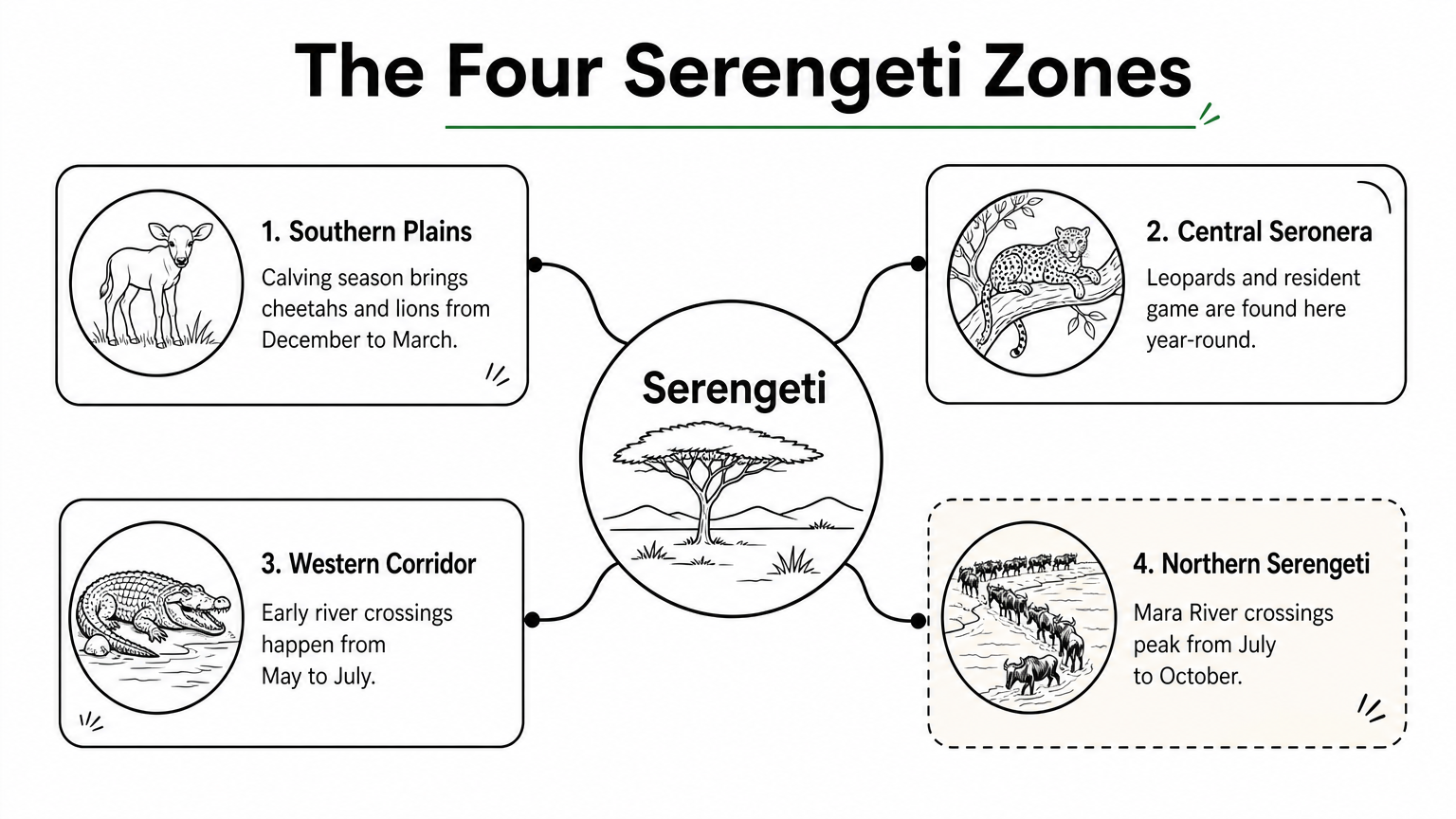
The four main zones
| Region | Best months | Known for | Trade-off |
|---|---|---|---|
| Southern plains and Ndutu | December to March | Calving, cheetahs, lions | Mostly empty after April |
| Central (Seronera) | Year-round | Leopards, lions, resident game | Busiest area, more vehicles |
| Western corridor (Grumeti) | May to July | Early river crossings, crocodiles | Short window, fewer camps |
| Northern (Kogatende, Lamai) | July to October | Mara River crossings | Remote, pricier, long drives |
Seronera in the heart of the Serengeti is the easiest base for a first visit. It offers year-round resident game, including leopards resting in sausage trees, and it has an airstrip with scheduled flights. The north is the opposite. It is quieter and more remote, and you go there for one reason, the crossings.
How to choose your bases
Match the zone to your month first, then to your trip length. A good african safari serengeti route rarely tries to cover the whole park. Use these rules of thumb:
- 3 nights: stay in one zone only.
- 5 to 7 nights: split between two zones, such as Seronera plus the north.
- Long transfers: fly between airstrips and save most of a day on the road.
Two well-chosen bases beat three rushed ones, because every transfer costs you a morning of game viewing.
Finally, think about the Kenya border. The northern Serengeti and the Masai Mara are one ecosystem, so a traveler who wants crossings can base in either country. A Serengeti African safari paired with the Mara also lets you see both sides of the river in a single trip. Tell your operator which zones you want, and ask for drive times between each one in writing.
Step 3. Decide on tour type and trip length
Your month and region are set, so now decide how you travel. Tour type controls your privacy and your price. Trip length controls how much of the park you actually see.
Compare the main tour types
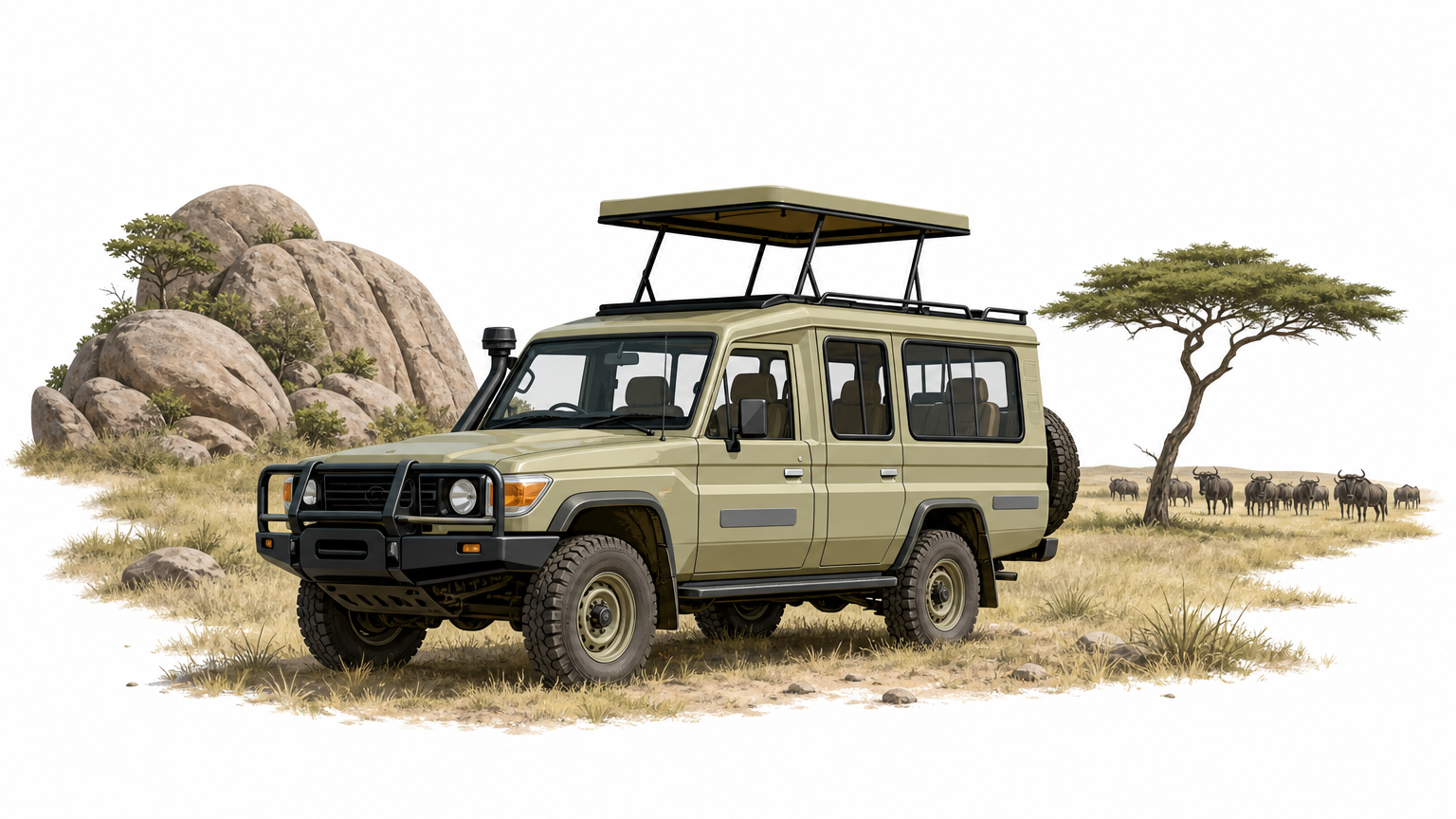
Most african safari tours Serengeti operators sell fall into three formats. For a first visit, a private vehicle with your own guide gives you the most control, because you decide when to leave camp and how long to stay at a sighting.
| Format | Best for | Trade-off |
|---|---|---|
| Private 4x4 safari | Couples, families, photographers | Highest per-person cost for pairs |
| Shared group departure | Solo travelers, tight budgets | Fixed schedule, shared vehicle |
| Fly-in safari | Short trips, long distances | Luggage limits, higher price |
Decide whether to drive or fly
Driving from Arusha to Seronera takes roughly eight hours, usually with a stop at Ngorongoro Crater. It costs less and shows you the landscape, but it eats a full day at each end.
Flying covers the same distance in about an hour and a half on a small plane. Flights between airstrips inside the park cost more, yet they save you a morning of game viewing on every transfer. If your trip is under five days, flying one leg is usually worth it.
Choose how many days you need
Length decides how much of the park you can reasonably cover without rushing. Use these as a starting point for a Serengeti African safari:
- 3 days: one zone, ideal as an add-on to Ngorongoro or Tarangire National Park.
- 4 to 5 days: one zone in depth, or two zones with a flight between them.
- 6 to 7 days: two zones, which is enough to catch crossings and resident big cats.
- 8 days or more: two zones plus a Kenya extension in the Masai Mara.
Five nights is the shortest trip that lets you see the Serengeti properly, and seven nights is where it starts to feel unhurried.
Build in a buffer day if crossings are your goal, because herds do not follow a timetable. Then ask each operator to price the same itinerary in writing, so you can compare quotes fairly in the next step.
Step 4. Set your budget and know the costs
What a day in the Serengeti costs
Budget by the day, not by the trip. For a private african safari serengeti itinerary, these are typical ranges per person per day for two people sharing. They cover lodging, meals, park fees, a 4x4 vehicle, and a guide.
| Tier | Per person per day | What you get |
|---|---|---|
| Budget | $300 to $450 | Basic camping or simple lodges |
| Mid-range | $450 to $800 | Tented camps or lodges with private bathrooms |
| Luxury | $800 to $1,500+ | Small camps in prime zones, often with flights |
A 6-night trip at mid-range therefore lands around $2,700 to $4,800 per person. Peak months from July to October sit at the top of each band, while April and May sit at the bottom.
Compare quotes by what each one includes, not by the headline daily rate.
Costs quotes often leave out
Two quotes that look $300 apart may simply cover different things. Ask each operator to confirm in writing whether these items are in the price:
- Park and concession fees, which exceed $80 per adult per day and run higher in some northern areas.
- Internal flights, often $250 to $450 per person per leg.
- Tips for your guide and camp staff, usually $15 to $25 per day for the guide.
- Hot air balloon rides, around $600 per person.
- Visas, travel insurance, and international flights, which no safari quote covers.
Drinks, laundry, and Wi-Fi are extras at many camps too.
Ways to keep the price down
Flexibility saves more than haggling. Travel in June or early November instead of August, and you often find the same wildlife with fewer vehicles and lower rates. Sharing a vehicle among four people also splits the largest fixed cost.
Solo travelers should ask about single supplements early, because they can add 30 to 100 percent to a room rate. If your budget is tight, spend it on a better guide and a well-placed camp rather than a longer stay in a poorly located one. Our team builds private Serengeti African safari quotes at every tier, so tell us your ceiling up front and we will fit the route to it.
Step 5. Choose where to stay and compare operators
Where you sleep decides how much time you spend driving, so treat your camp as part of the route. Location beats amenities in the Serengeti. A simple tent near the Mara River gives you more than a spa lodge two hours from the herds, and a good Serengeti African safari puts you in the right zone at dawn.
Match the camp style to your trip
Three styles cover most of what you will find. Permanent tented camps suit most travelers, while mobile camps shift with the herds for a few months each year.
| Style | Best for | What it feels like |
|---|---|---|
| Lodge | Families, comfort seekers | Solid rooms, pool, restaurant, more guests |
| Permanent tented camp | Most travelers | Canvas walls, real beds, en-suite bathrooms |
| Mobile camp | Migration chasers, privacy | Small, seasonal, placed close to the herds |
Check the map before you fall for photos. Ask how long the drive is from the camp to the river crossings or calving plains in your month.
The best camp is the one closest to the herds in the month you travel.
Vet operators before you pay
Operators differ more than camps do, and the cheapest quote often hides the weakest guide. Send the same five questions to each company and compare the written answers side by side:
- Is the price itemized, with park fees, flights, and transfers on separate lines?
- Which camps are included, and how far are they from the herds in your dates?
- Is your guide named, licensed, and experienced in the zone you are visiting?
- Is the vehicle a 4x4 with a pop-up roof and a guaranteed window seat for every guest?
- What happens if a flight is delayed or you need to cancel?
Next, confirm who runs the Tanzania portion on the ground. Many companies resell trips to a partner, so ask for a valid Tanzanian tour operator license and the partner's name. Then read recent guest reviews and look for named guides and fast replies. Reviews that praise patient quote revisions and responsive communication tell you more than a polished brochure.
Finally, test their service before you book. If an operator takes four days to answer a pricing question, expect the same pace when a transfer goes wrong in the bush.
Step 6. Book, prepare, and pack
Lock in your booking
Once you have a written itinerary you like, book as early as you can. Camps in the north fill 9 to 12 months ahead for July through September, and the best guides are assigned along with them. Most operators hold your dates with a deposit, then collect the balance 60 to 90 days before arrival. Before you pay, get these four items in writing:
- The deposit amount and the balance due date.
- The cancellation schedule, with dates and percentages.
- The exact camps, flights, and transfers on your route.
- The name of your guide, or at least the guide's experience level.
Book the camp first, because the right bed in the right month is the one thing you cannot buy later.
Sort out paperwork and health
Most visitors need a Tanzanian visa, and you can apply online before you fly through the official immigration portal. Your passport should have at least six months of validity and blank pages. If you arrive from Kenya or another yellow fever country, carry a yellow fever vaccination certificate. This matters if you pair the Serengeti with the Masai Mara.
See a travel clinic six to eight weeks out to discuss malaria tablets and routine vaccines. Then buy travel insurance that covers medical evacuation. Flying a patient out of a remote airstrip is expensive, and a standard policy may not pay for it.
Pack for cold dawns and small planes
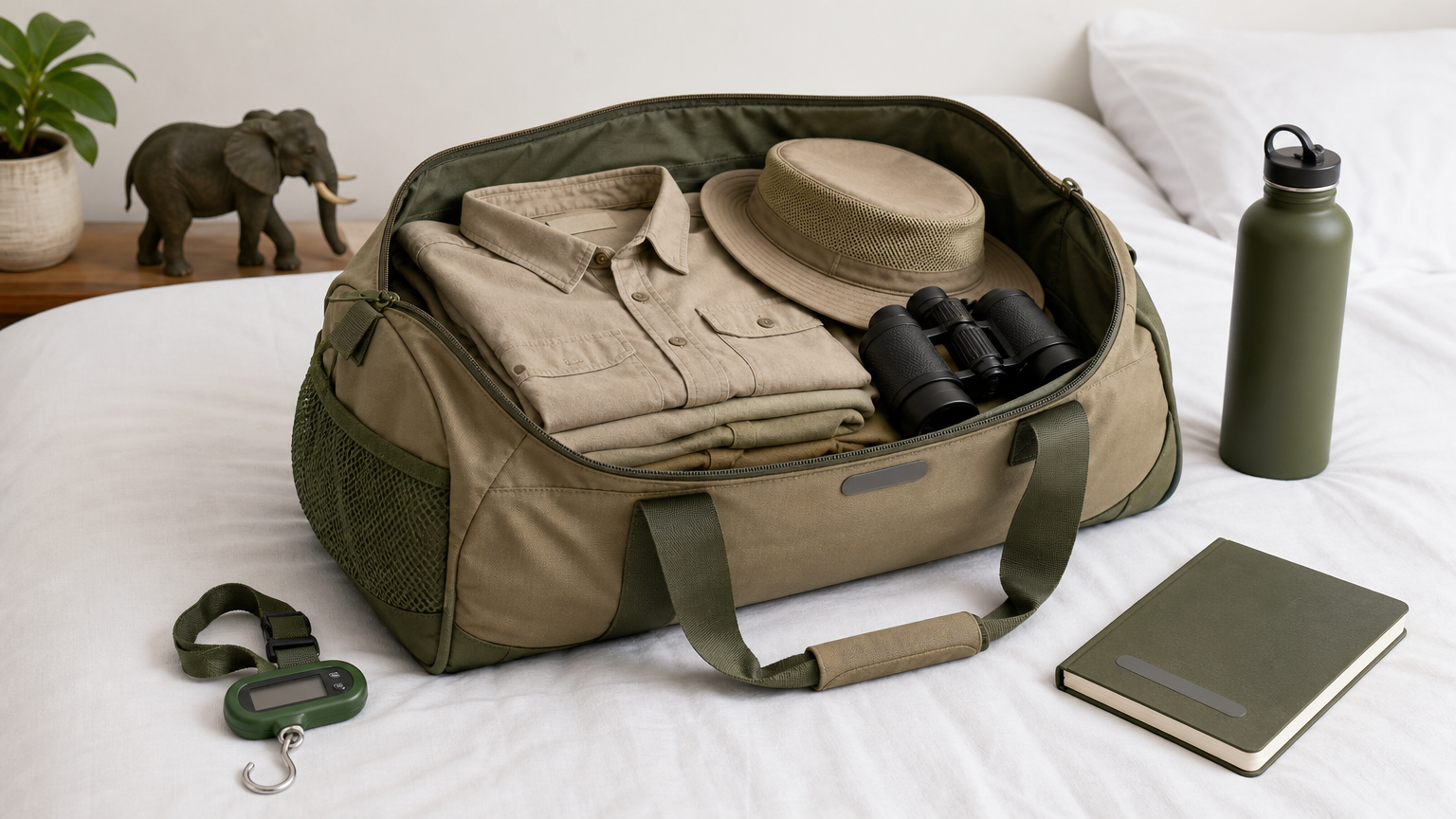
Fly-in itineraries usually cap luggage at about 33 lb (15 kg), and bush pilots want a soft-sided duffel rather than a hard suitcase. Mornings on a game drive start near 50°F, while midday turns hot, so layers work best. Use this list as your base:
- Neutral shirts and trousers in khaki, olive, or tan. Skip black and dark blue, which attract tsetse flies.
- A fleece and a windproof jacket for dawn drives.
- A wide-brim hat, sunglasses, and SPF 30 or higher sunscreen.
- 8x42 binoculars, which matter more than any other gear.
- A camera with a 200 to 400 mm lens, extra batteries, and a dust cover.
- A Type D/G power adapter and a small power bank.
- Insect repellent and a personal medical kit.
Test your packing a week early with a kitchen scale. Send your operator your flight details and dietary needs, and ask for a final itinerary 30 days out so every transfer is confirmed before you leave home.
Ready to plan your Serengeti trip
A great african safari serengeti trip comes down to six decisions made in the right order. Pick the month for the herd you want, choose the region that matches, and then set tour type and length. Budget by the day, and compare camps and operators on identical itineraries.
Book early, because the best camps in the north fill up long before peak season. Sort out your visa, insurance, and vaccinations well ahead of time, and pack light for the small planes. If you follow these steps, you will arrive with a route that fits your dates and budget, not a rushed compromise.
When you are ready, explore Tanzania safari destinations and request a personalized Serengeti itinerary from our team. Tell us your dates, group size, and budget, and we will send a written quote you can compare with confidence.