
 中文
中文 عربي
عربي Français
 Nederlands
 Deutsch
 Italiano
 Português
 Español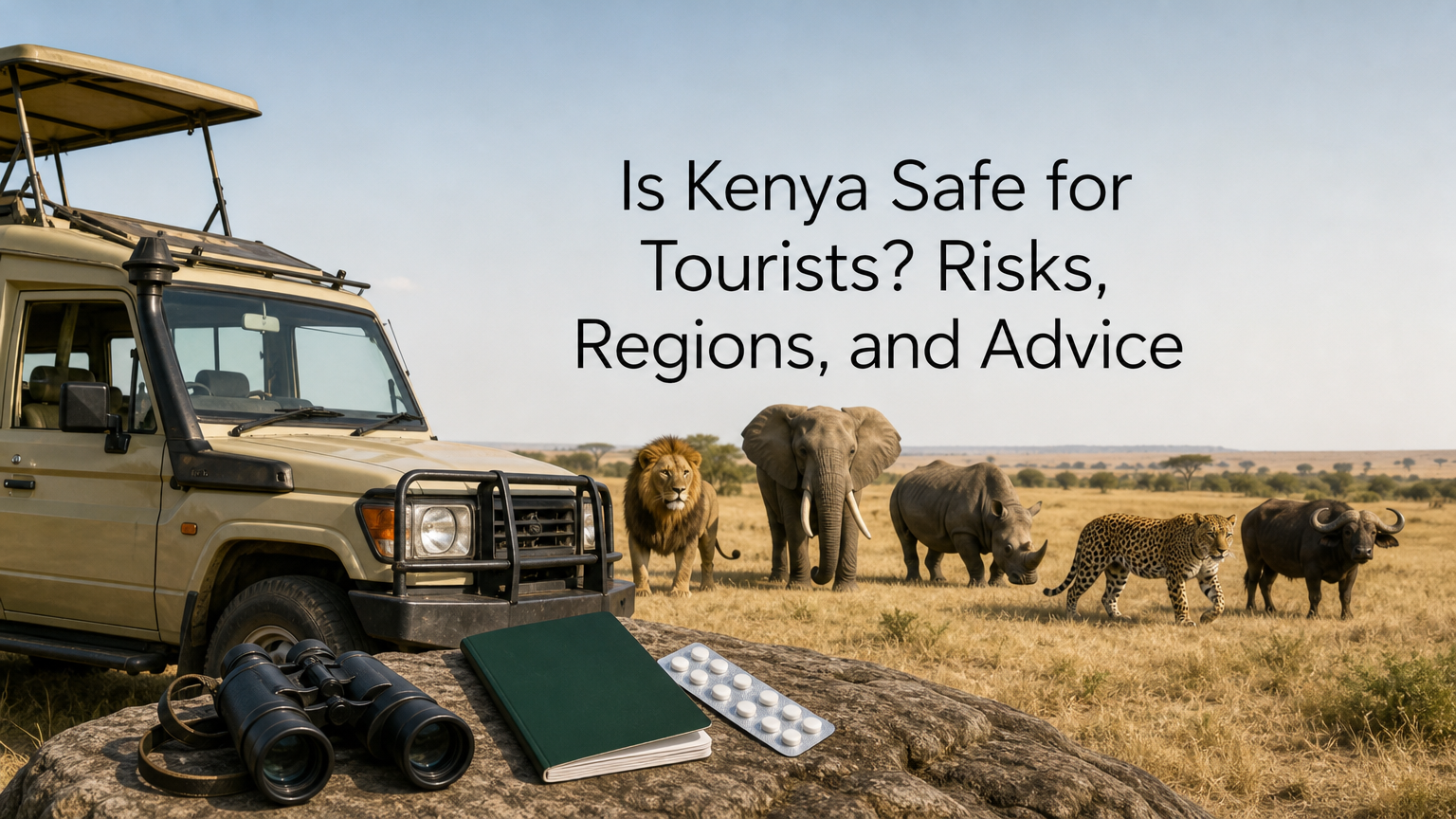
If you have typed Kenya is it safe into a search bar, here is the direct answer: yes for most tourists, provided you plan around a short list of known risks. The standard safari circuit, including the Masai Mara, Amboseli, Samburu, Lake Naivasha and the Diani coast, hosts visitors every year without trouble. The risks that do exist are street crime in cities, terrorism near the Somali border, occasional political protests, road accidents, and a few health issues.
"Safe" never means risk-free, anywhere. In Kenya it means the dangers are well understood, concentrated in particular places, and manageable with preparation. Governments say as much. They advise caution across the country and warn against travel only to specific regions that tourists rarely have a reason to enter.
We are Extra Miles Unique Adventures, a Kenya-based tour operator that has designed private safaris since 2007, so this question comes up in our work constantly. Below you will find what the official advisories say, where the real risks sit, a practical safety checklist, and straight answers for women, solo travelers, LGBTQ+ visitors and Americans.
Why Kenya's safety depends on where you go
Kenya is safe in the places most tourists go and unsafe in a few places they never need to visit. Official advisories reflect that split. They urge caution nationwide and then single out particular regions, so a flat yes or no to "is Kenya safe" hides the detail that matters.
What the major travel advisories say
Four governments publish detailed guidance on Kenya, and they broadly agree. Caution applies everywhere, and the warnings tighten near the Somali border. The table shows the headline positions. Wording changes over time, so open each page before you book.
| Government | Overall stance | Main concerns named |
|---|---|---|
| US State Department | Exercise increased caution | Crime, kidnapping, terrorism, unrest, health, traffic safety, with higher risk in some areas |
| UK FCDO | Advises against all travel, or all but essential travel, to parts of Kenya | Specific regions, mostly border areas |
| Government of Canada | Regional warnings | High crime rate in most regions, especially Nairobi, Mombasa, Kisumu and beach resorts, plus petty crime |
| Australia Smartraveller | High degree of caution | Terrorism and violent crime, with higher levels in some areas |
Kenya's strictest warnings target remote border regions, not the main safari parks.
Which parts of Kenya carry the most risk
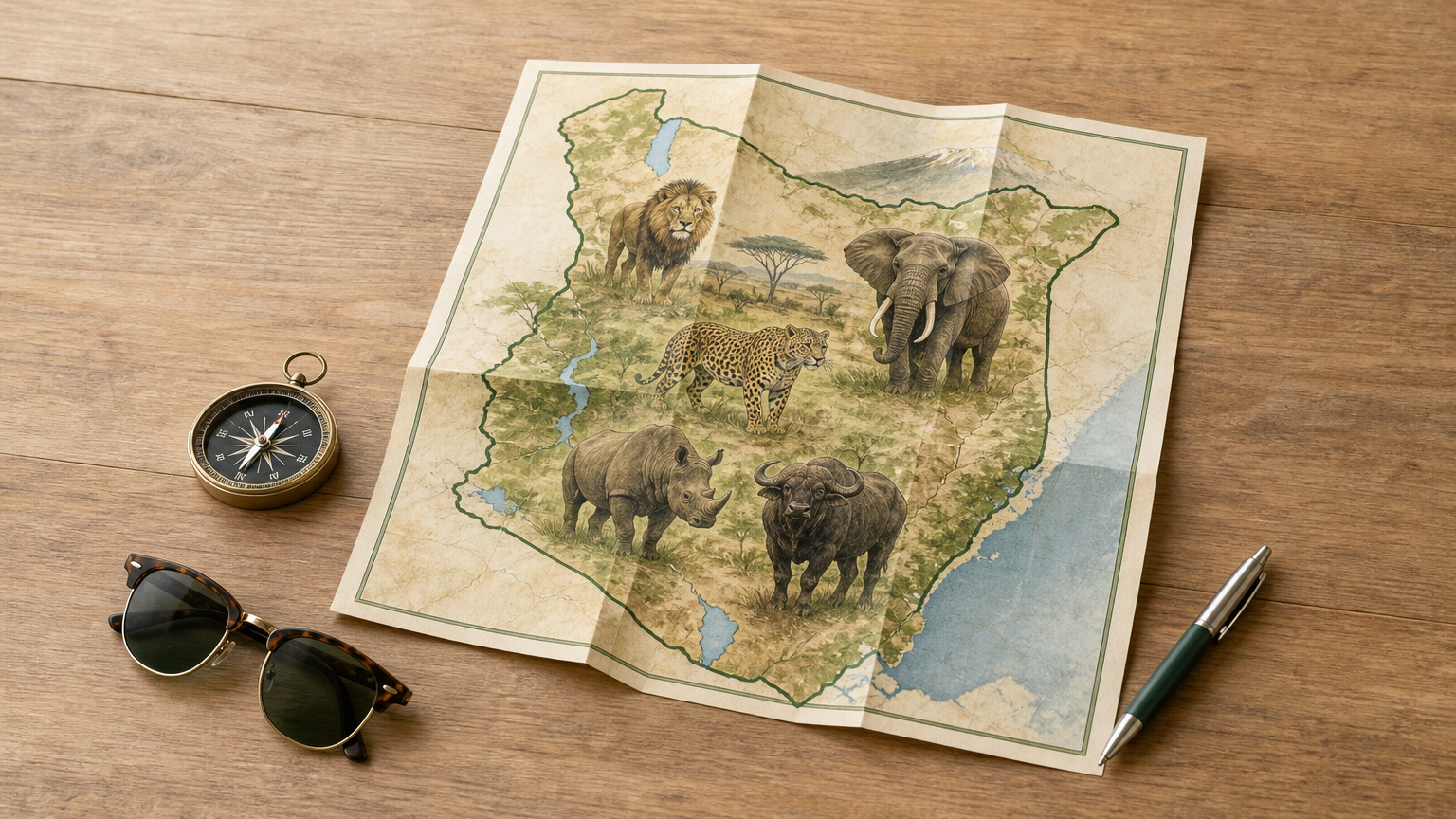
Risk in Kenya is local, so the useful question is which part of the country you are asking about. This breakdown reflects how the advisories and our own routing treat each area.
| Area | Main risks | Practical view |
|---|---|---|
| Nairobi | Street crime, snatch-and-grab theft, protests | Fine with vetted transport and no night walking |
| Masai Mara, Amboseli, Samburu, Naivasha, Nakuru, Tsavo | Very low crime. Road conditions, wildlife, malaria | The standard safari circuit, with professional guides |
| Mombasa and Diani | Petty theft, unattended beach belongings | Fine with normal care |
| Lamu region | Proximity to Somalia, advisories on parts of the county | Check the current advisory before considering it |
| Northeast counties (Mandera, Wajir, Garissa) and remote northern borders | Terrorism, kidnapping | Avoid. No standard itinerary goes there |
How to check the current picture before you book
Anyone asking whether it is safe to travel to Kenya right now needs a source that updates, and a blog post is not one. Read your own government's advisory when you book and again a week or two before departure. Americans should also enroll in the Smart Traveler Enrollment Program so the embassy can reach them in an emergency.
A local operator adds a second layer. A Kenya-based team hears about protests, road closures and weather the same day, and can reroute you before it affects your trip. Ask any operator you consider how they handle that.
What the real risks are and how serious they are
Is Kenya a safe country? Mostly, and the risks a tourist is likely to meet are ordinary ones. In rough order of likelihood, they are road accidents, petty crime, illness, protests and terrorism. Terrorism is the least likely and the most severe, which is why it gets the most attention.
Crime and scams
Petty theft is the most common problem. In Nairobi it takes the form of phone snatching, bag theft and hands reaching through open car windows in traffic. At the coast it is usually a bag left on the sand while someone swims. Violent crime exists, mostly in cities and mostly after dark.
Scams follow tourists too. Watch for unlicensed "guides" at attractions, inflated park fees from strangers, and fake operators online. Book through an established company, and ask whether it holds a license from the Tourism Regulatory Authority.
Terrorism and political unrest
Al-Shabaab has attacked Kenya repeatedly, including the Westgate mall in 2013 and the DusitD2 complex in 2019, both in Nairobi. The threat is highest in the northeast and along the coast near Somalia, though it can reach the capital. Malls, hotels and offices screen visitors for this reason. Treat the bag check as protection, not an inconvenience.
Protests are the other variable. In recent years demonstrations over taxes and governance have turned violent in Nairobi and other cities. They are usually announced in advance and concentrated in city centers, far from the parks. Stay away from any gathering, and follow your hotel's and operator's guidance.
Roads and health
Roads are the biggest everyday danger. Long drives at night mix poor lighting, unpredictable hazards and driver fatigue. Skip matatus (minibus taxis) and avoid driving yourself between regions.
For health, plan around these points:
- Malaria: Present at the coast, around Lake Victoria and in lowland areas. Nairobi's altitude keeps the city low-risk. See a travel clinic several weeks before departure about prevention.
- Yellow fever: Proof of vaccination is required if you arrive from an endemic country.
- Water and food: Drink bottled or filtered water, and eat freshly cooked food.
- Insurance: Choose a policy with medical evacuation. Nairobi has strong private hospitals, but care thins quickly outside it. The CDC's Kenya page lists current health guidance.
For most visitors, the likeliest harm is a road crash or a stolen phone, not an attack.
How to stay safe in Kenya, step by step
Is it safe to travel in Kenya? It is when you make a few good decisions before you land and keep simple habits in the cities. None of it is complicated.
Before you travel
Preparation removes most of the risk. Work through this list:
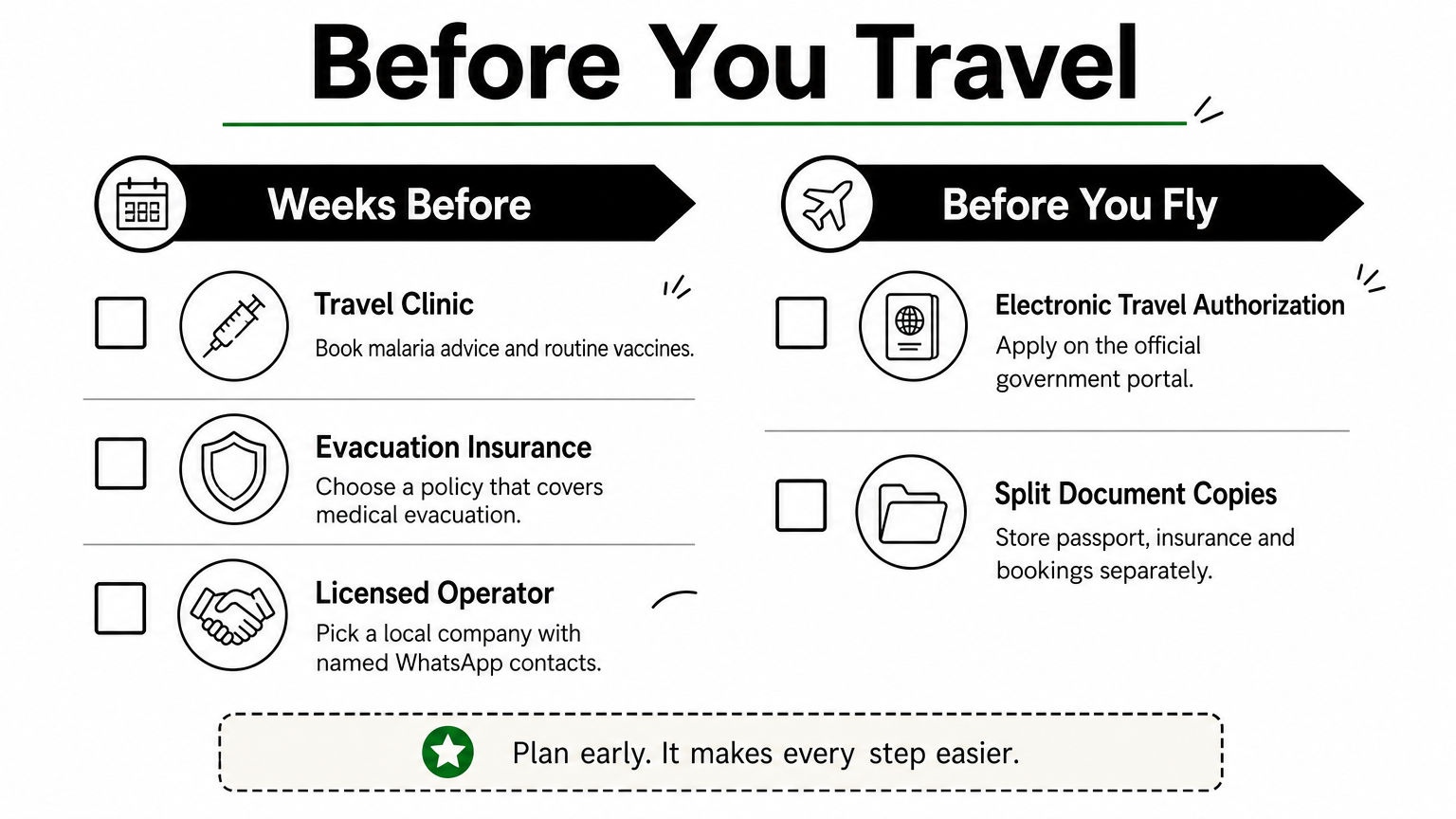
- Apply for Kenya's Electronic Travel Authorization on the official government portal before you fly.
- Buy travel insurance that covers medical evacuation.
- Book a travel clinic visit for malaria advice and routine vaccines.
- Choose a licensed, locally based operator with named contacts you can reach on WhatsApp.
- Keep digital and paper copies of your passport, insurance and bookings, stored separately.
- Read your government's current advisory, and enroll in your embassy's traveler program.
In Nairobi and Mombasa
City habits matter more than anything else on this list. Use hotel cars or ride-hailing apps instead of hailing cars on the street. Keep windows up and doors locked in traffic, with your phone out of sight. Do not walk after dark, even a short way.
Carry only the cash you need, and leave your passport in the hotel safe. Stay in established areas such as Karen, Westlands and Gigiri. Dress plainly, because visible phones, cameras and jewelry attract theft far more than nationality does. On the beach, never leave belongings unwatched.
On safari and between parks
Safari itself is low-risk. You travel in a private vehicle with a professional driver-guide, and the real rule is to follow your guide's instructions. Stay inside the vehicle around wildlife, and walk through camps at night only with an escort.
The move between parks is where risk concentrates, so avoid long road days. A flying safari replaces hours on the road with short scenic flights. For road transfers, daylight and an experienced driver are non-negotiable. We build every itinerary around trusted partners chosen for comfort, safety and value, and our team stays reachable throughout your trip.
Fly or hire a professional driver between regions, and never walk around cities after dark.
Is Kenya safe for women, solo and LGBTQ+ travelers?
Yes, with the same precautions that apply to everyone and a few extra considerations. Is Kenya safe for tourists of every background? Visitors of all nationalities and ethnicities travel here, and risk follows visible wealth and behavior more than who you are.
Women and solo travelers
Many women travel Kenya alone, usually on safaris where guides, lodge staff and small groups provide built-in company. Harassment, such as unwanted attention or persistent offers, happens in cities. Manage it with transport discipline and no late-night walks. The famously friendly reception in the parks and lodges is real, and English is widely spoken.
LGBTQ+ travelers
Kenyan law criminalizes same-sex activity, and public attitudes are conservative. Many LGBTQ+ travelers visit without incident, particularly at safari lodges that handle guests discreetly. Avoid public displays of affection, and tell your operator in advance so they can choose properties thoughtfully.
Americans, families and first-timers
Americans can read the US advisory's "increased caution" level as a nationwide reminder, not a barrier. Standard safari itineraries avoid the areas it flags. Families do well on shorter trips, such as a short escape to Amboseli, with private vehicles and fewer transfers. First-timers benefit most from a private itinerary, because someone else handles the logistics.
Kenya works for solo women, couples, families and first-timers when the route and the transport are planned well.
Travel to Kenya with a plan
Kenya is safe for tourists who respect its known risks. Choose your regions with care, avoid the border areas, stay alert in cities, and never skimp on road safety or insurance. Check your government's advisory before you go, because that is the one source that stays current.
If you want those decisions made by people who live here, ask our team to plan a private Kenya safari. Tell us your dates, group and budget, and we will design a route and a quote around your comfort and safety.