
 中文
中文 عربي
عربي Français
 Nederlands
 Deutsch
 Italiano
 Português
 Español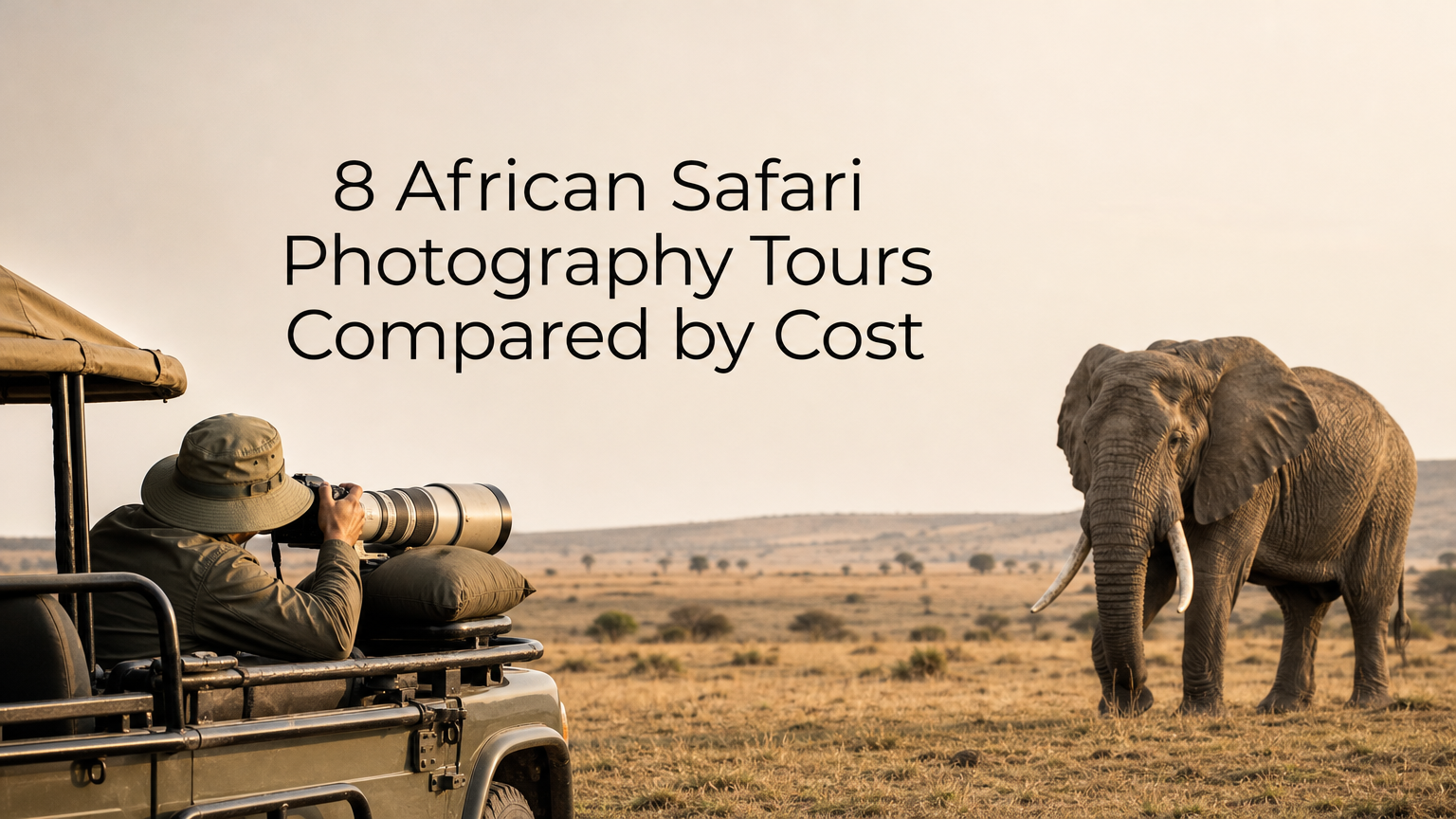
The best African safari photography tours share four traits: one photographer per row of seats, small groups, itineraries built around morning and evening light, and a lead photographer who coaches you in the field. Pangolin Photo Safaris and Tusk Photo suit travelers on a tighter budget. ORYX and C4 Photo Safaris suit people who want rental gear and strong instruction. Squiver and Andy Biggs suit experienced shooters with larger budgets. Extra Miles Unique Adventures suits travelers who want a private, self-paced trip in Kenya or Tanzania.
Every operator promises exclusive access and expert guidance. Starting prices run from under $2,000 to over $10,000, and brochures rarely say how many people share your vehicle or whether anyone will teach you anything. That makes comparing trips harder than it should be.
This guide compares eight operators on destinations, vehicles, instruction, and published starting prices. It then covers how to choose, where to go, when to travel, and what to budget. We are a Kenya-based safari company, so we list ourselves first and say plainly where a dedicated workshop operator is the better fit.
1. Extra Miles Unique Adventures
What you get
Extra Miles Unique Adventures is a Kenya-based operator, rooted locally since 2007, that designs private, tailor-made safaris across Kenya, Tanzania, Uganda, and Rwanda. It is not a workshop company. Wildlife photography is one of the safari styles it plans, and every trip is built around your dates, pace, and parks. Among African safari photography tours, this is the self-directed option.
- Destinations: Masai Mara, Amboseli, Samburu, Naivasha, Tsavo, Lake Nakuru, Tanzania, and gorilla trekking in Rwanda and Uganda
- Trip length: 3 to 10 days
- Group: private, so only your party shares the vehicle
- Stays: budget to luxury, including flying safaris
The process has three steps. You share your dates, group size, parks, and style. You receive a custom itinerary and quote that you refine with the team. Then you travel with support, including WhatsApp contact.
How the photography works
A private safari puts the schedule in your hands. You can leave camp before sunrise, stay an hour with one leopard, and skip any stop that does not suit your frame. Tell the team how many bodies and lenses you carry, and ask for a vehicle with a pop-up roof or open window space for every photographer when you request your quote.
Locations carry the photography. The Masai Mara delivers Great Migration river crossings and big cats. Amboseli puts elephants in front of Mount Kilimanjaro, and a three-day Amboseli safari is the quickest way to try it. Local guides know the routes, seasons, and likely sightings. You will not get scheduled critiques or post-production classes, though. If you want those, choose one of the workshop operators below.
Cost and best fit
From-prices run from about $609 per person for a 3-day Amboseli safari to roughly $6,500 for 10-day bespoke luxury trips. The Grand Kenya Flying Safari links Samburu, the Mara, and Amboseli by air, which swaps long road days for more time behind the camera.
This fits hobbyists who learn by doing, photographers traveling with a partner or family who do not shoot, and anyone who wants East Africa without a fixed group departure date. It fits less well if you want daily image critiques.
A private safari gives you the light and the time, while a workshop adds the teacher.
2. Pangolin Photo Safaris
What you get
Pangolin Photo Safaris is based in Botswana's Chobe region. Few African safari photography tours start this low, and Pangolin also owns some of the properties it uses rather than renting every bed from third parties. It runs trips in Botswana, Kenya, Namibia, South Africa, Tanzania, Zambia, and Zimbabwe.
- Trip length: 3 to 28 days
- Group size: up to 8 guests with one lead photographer
- Vehicles: four guests per vehicle
- Stays: mid-level, including its own Chobe hotel and a houseboat
How the photography works
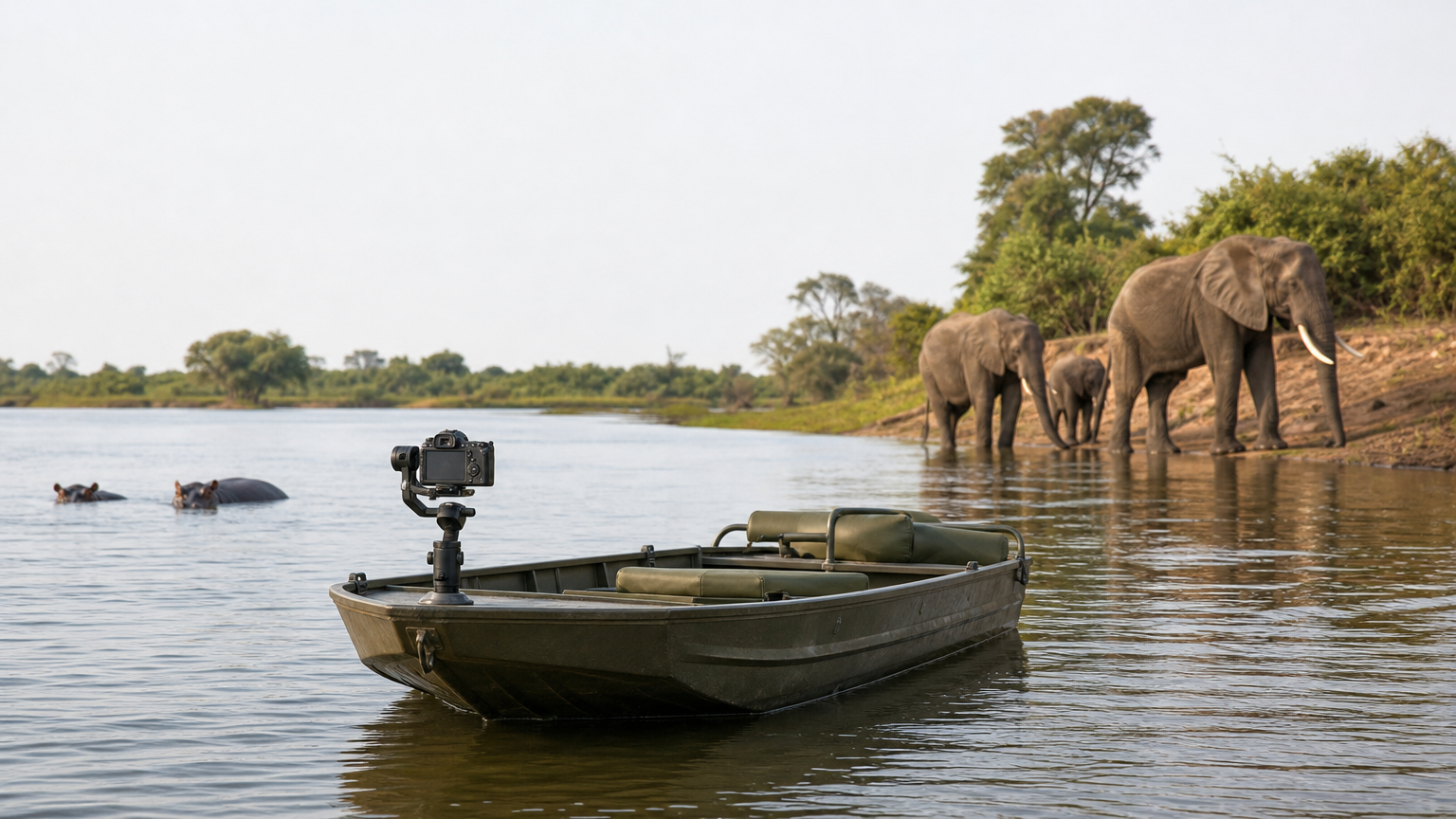
The signature setting is the river. Pangolin runs photographic boats with gimbals on the Chobe, where elephants and buffalo come down to drink. A low boat puts your lens at animal eye level and gives you cleaner backgrounds than a high vehicle. A houseboat is available for longer stays, and on land you ride in open and closed vehicles with bean bags and camera rests.
Instruction is proactive, with workshops and post-production help on offer. Beginners through professionals are welcome. Four guests per vehicle means you may share a row, so ask how seating rotates before you book.
Cost and best fit
Published starting prices begin near $1,500 per person for short trips and climb with length and destination. The company's Chobe hotel lends Canon 80D bodies and 150-600mm lenses free of charge, which saves you from renting long glass.
It suits first-timers, budget-minded photographers, and anyone drawn to river photography. It suits you less if a guaranteed row to yourself is non-negotiable.
Pangolin's strength is the Chobe River, and its price makes it the easiest entry point on this list.
3. Tusk Photo
What you get
Tusk Photo is a Pretoria-based operator with one of the widest country lists here: Botswana, Kenya, the Democratic Republic of Congo, Namibia, Rwanda, South Africa, Tanzania, Uganda, Zambia, and Zimbabwe. The company says it supplies almost 3,000 photographic bed-nights to destinations in Africa and abroad. For African photographic safari tours, that is a large buyer's footprint.
- Trip length: 5 to 30 days
- Group size: up to 8 guests with two lead photographers
- Vehicles: four guests per vehicle
- Stays: luxury lodges such as Elephant Plains Game Lodge and Belmond Savute Elephant Lodge
How the photography works
Tusk uses open game drive vehicles as often as possible, including in East Africa, and runs luxury houseboats on the Chobe River. Instruction is proactive and includes post-production help. The company says it caters to every skill level.
Two leaders for a maximum of eight guests works out to one leader per four people. That ratio matters more than the brochure photographs. Leaders include Brendon Cremer, a professional guide with nearly two decades in the African bush, and Dawie Jacobs, who started out guiding in Sabi Sands.
Cost and best fit
Starting prices sit near $1,800 per person. Rental gear comes through the partner ODP Rentals, and the company lists no conservation program at this time.
It suits photographers who want a broad choice of countries at a low entry price, including primate trips in Rwanda or Uganda. Four to a vehicle is a real compromise if you shoot big lenses on both sides of the car.
Tusk pairs a low starting price with a healthy leader-to-guest ratio.
4. ORYX Photo Tours
What you get
ORYX Photo Tours started in South Africa and now operates from Mauritius. It offers scheduled small-group departures in Botswana, Ethiopia, Kenya, Namibia, Madagascar, Rwanda, South Africa, Tanzania, Zambia, and Zimbabwe, plus private tours in Uganda and the Republic of Congo. Culture and scenic trips sit alongside the wildlife schedule, and several African safari photography tours in its catalog are small enough to feel private.
- Trip length: 4 to 20 days
- Group size: up to 6 guests
- Vehicles: one photographer per row
- Stays: luxury and ultra-luxe camps such as Zarafa Camp and Mara Plains
How the photography works
The row rule is firm: a group of six travels in two vehicles. Vehicles are customized Land Rovers or Land Cruisers, bean bags are standard, and gimbal heads are available on specific vehicles at some properties. Wildlife reserves use open-sided vehicles. Ngorongoro Crater is the exception, where large windows and side panels replace open sides.
Instruction covers workshops, proactive field coaching, and post-production. Leaders tailor advice to each guest's level, from beginner to advanced. Helicopters may be used for aerial photography on some itineraries.
Cost and best fit
Starting prices begin around $2,995 per person. Gear rental covers Canon, Nikon, and Sony bodies, lenses, and flashes, so you can test a 600mm lens before you buy one. A share of profit from tours booked at Great Plains properties goes to Rhinos Without Borders through the Oryx Conservation Fund.
It suits travelers who want their own row, rental gear, and structured tuition. Luxury camps push the price up on longer itineraries, so request a full quote rather than judging from the starting figure.
ORYX is the strongest pick if you want a guaranteed row, rental lenses, and small groups together.
5. C4 Photo Safaris
What you get
C4 Photo Safaris is a Pretoria-based operator with the longest destination list here, spanning 14 countries that include Botswana, Kenya, Tanzania, Uganda, Rwanda, Namibia, Zambia, Zimbabwe, Ethiopia, and Gabon. Aerial and cultural trips sit alongside wildlife. Among African safari photo tours, C4 leans hardest into custom itineraries, and the company says more than 60 percent of its business is custom safaris.
- Trip length: 4 to 21 days
- Group size: 8 to 10 guests, with one lead photographer per three clients
- Vehicles: one guest per row
- Stays: mid-level to ultra-luxe, such as Mashatu Main Lodge, Londolozi, and Chitabe
How the photography works
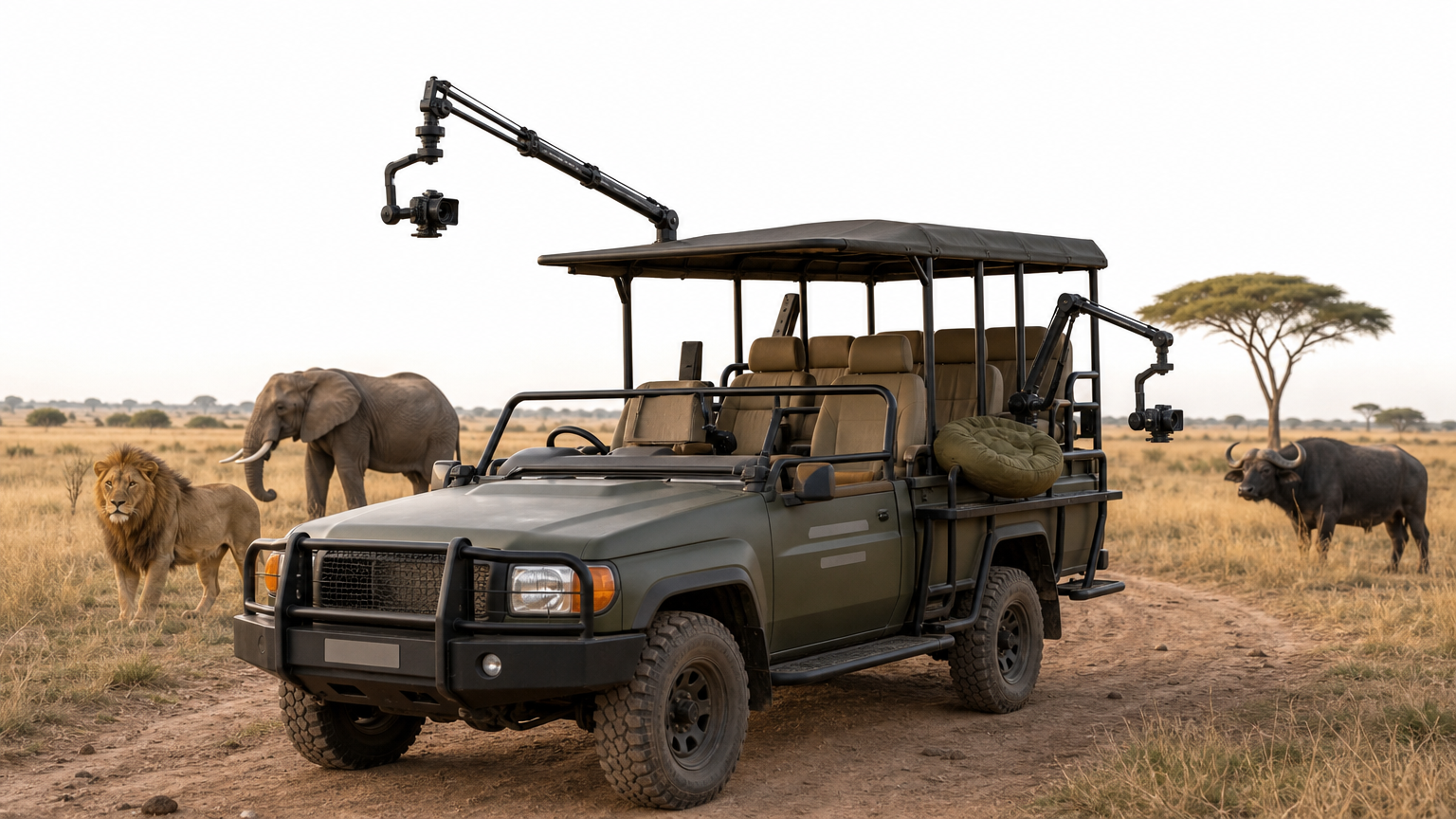
At Mashatu, C4 uses its own dedicated photographic vehicle. It is open, with swinging arms and gimbal heads. Elsewhere it selects camps whose vehicles suit photography. Boats run on the Chobe and Okavango, and Mana Pools involves a lot of walking.
The guide roster is the draw. Greg du Toit, an overall Wildlife Photographer of the Year winner, specializes in predators. Isak Pretorius focuses on birds, and Kyle de Nobrega on rainforests. Instruction includes workshops, proactive coaching, and post-production, and gear rental covers every level of camera and lens.
Cost and best fit
Starting prices begin near $3,200 per person. The company reports a 75 percent repeat-client rate, which is its own figure but suggests clients return.
It suits photographers chasing a specific subject, such as predators, birds, or forest primates, and those who want remote destinations most operators skip. The 1:3 leader ratio is the best in this list.
C4 is the pick when your subject is specific and you want a guide who specializes in it.
6. Images of Wildlife Photo Tours & Safaris
What you get
Images of Wildlife is a UK-based, husband-and-wife operation run by Andy and Sarah Skinner. It focuses on four countries: Botswana, Kenya, Tanzania, and Uganda. Sarah is a qualified FGASA field guide and won the mammals category of the GDT European Wildlife Photographer of the Year in 2017. These African photography safari tours also include night-sky photography in Botswana.
- Trip length: 8 to 13 days
- Group size: up to 9 guests with two lead photographers
- Vehicles: three guests in Kenya and Tanzania, four in Botswana and Uganda
- Stays: mid-level and luxury, such as Entim Camp and Zebra Plains Camp
How the photography works
Kenya and Tanzania vehicles are extended Land Cruisers with large open sides and roof access, and each guest gets a row. Botswana vehicles carry wooden camera mounts on every row and side, a drop-down windscreen, and onboard charging. Tanzania vehicles also charge devices onboard. Every guest receives a large camera bean bag.
Instruction runs through workshops and proactive coaching. The Skinners ask each guest at the start what species and photographic skills they want, then tailor the days around those answers. A UK rental partner, Lenses for Hire, offers guests a 25 percent discount.
Cost and best fit
Starting prices begin near $4,000 per person, which places it in the middle of the market. No conservation initiative is listed.
It suits couples and UK or European travelers who want a mid-priced, coaching-heavy trip with a row each in East Africa. It is less suited to anyone who wants a long list of countries.
Images of Wildlife offers a row per guest in East Africa at a mid-market price.
7. Andy Biggs Photo Safaris
What you get
Andy Biggs Photo Safaris is a US-based operator that has run safaris for years across 11 countries: Botswana, the Democratic Republic of Congo, Ethiopia, Kenya, Namibia, Rwanda, South Africa, Tanzania, Uganda, Zambia, and Zimbabwe. Itineraries steer toward remote places that benefit from park fees and local employment. Among African safari photography tours, this is a leader-led, high-comfort choice.
- Trip length: 8 to 12 days on average, with pre- and post-safari options
- Group size: up to 7 guests with one or two lead photographers
- Vehicles: three guests per vehicle
- Stays: mid-level to ultra-luxe, such as Mara Plains and Sanctuary Chief's Camp
How the photography works
The standard vehicle is open with no windshield, and camera support options are available wherever you are. Extras differ by country. Helicopters operate in Botswana and northern Kenya, a flat-bottom boat runs on the Chobe River, and hot-air balloons fly over the Serengeti and Masai Mara.
Instruction is proactive and includes post-production. Safaris are general in nature and accommodate any skill level. Andy Biggs also supports the Shedrick Wildlife Trust and builds some itineraries around its elephant conservation work in Kenya.
Cost and best fit
Starting prices begin near $8,000 per person. Gear rental is not offered, so bring your own kit.
It suits photographers who want aerial and boat variety, luxury camps, and a seasoned leader at a premium price. It is poor value if you mainly want a cheap row in a vehicle.
Andy Biggs sells variety and comfort, so it is worth the premium only if you want both.
8. Squiver Photo Tours
What you get
Squiver Photo Tours is based in Amsterdam and built around award-winning leaders. It operates in Botswana, Kenya, Namibia, South Africa, Zambia, and Zimbabwe. Marsel van Oosten won Wildlife Photographer of the Year in 2018, and Greg du Toit won it in 2013. Few African photographic safari tours can put two such names in front of guests.
- Trip length: 9 to 15 days
- Group size: 6 to 9 guests with one or two lead photographers
- Vehicles: three guests, each with their own row
- Stays: best available camp, such as Chiawa Camp, Old Mondoro, and Londolozi
How the photography works
Vehicles are mostly open. Boats on the water carry gimbals, and microlight aircraft are part of the toolkit. Instruction includes workshops, proactive coaching, and post-production. Squiver's leaders are known for graphic compositions, light, and simplicity, so the feedback tends to be about seeing and composing, not about camera menus.
Squiver says it never takes guests somewhere it has not been before. It also lists landscape leaders such as Ryan Dyar, who shares processing videos with travelers.
Cost and best fit
Starting prices begin near $7,300 per person. No gear rental is offered, and no conservation initiative is listed.
It suits intermediate and advanced shooters who want composition-level feedback from competition winners. Beginners are welcome, but you pay for expertise that you may not yet use.
Squiver sells the leaders first and the locations second, so book it for the teaching.
How to choose an African photo safari operator
Choose on four things before you look at price: seats per vehicle, guests per leader, how instruction is delivered, and whether the itinerary follows the light. The best African photo safari tours get all four right, and the rest is detail.
Seats, vehicles, and shooting position
Ask for one guest per row. In a three-row vehicle that means three guests, and you can shoot from either side without leaning over a neighbor. Operators in this list vary from one per row (ORYX, C4, Squiver, Images of Wildlife in East Africa) to four per vehicle (Pangolin, Tusk).
Then check the vehicle itself. Look for these:
- Open sides or large window cutouts, plus roof access
- Bean bags supplied, and gimbal mounts if you shoot long lenses
- Onboard charging for batteries
- A schedule that allows early starts and long sightings
Group size and leader ratio
Maximum groups in this comparison run from 6 to 10. Smaller is better, but the leader ratio matters as much as the headcount. C4 assigns one leader per three clients. Tusk and Images of Wildlife field two leaders for eight or nine guests. Pangolin fields one for up to eight.
If you are new to wildlife photography, favor a ratio near 1:4 or better. If you are experienced and mainly want access and good light, a larger group costs you little.
Instruction, gear, and what the price includes
Proactive instruction means coaching in the field as sightings happen. A workshop adds scheduled sessions, and post-production covers editing. Piper Mackay, who runs her own photo safaris, keeps field time high by doing editing in a mid-day break rather than pulling guests back to camp. Ask each operator which model they follow.
Before you pay a deposit, ask these questions:
- Are park fees, internal flights, and the leader's fee included?
- Is gear rental available, and for which brands?
- What are the cancellation and single-supplement terms?
- Does the itinerary allow flexible time at a great sighting?
A cheap trip with four guests per row costs you more shots than a pricier trip with one.
Best destinations for African photo safaris
Destination decides what African safari photography tours can deliver. Pick East Africa for migration and big cats, southern Africa for elephants, leopards, and varied terrain, and Rwanda or Uganda for gorillas.
East Africa: Kenya and Tanzania
The Masai Mara and the Serengeti form one ecosystem. They deliver Great Migration river crossings from roughly July through October, along with lions, cheetahs, and leopards on open plains. Ngorongoro Crater packs a high concentration of animals into one caldera. Amboseli frames elephants against Mount Kilimanjaro, and Samburu adds northern species you will not see in the Mara.
Light is the East African advantage. Open plains give long, clean horizons at dawn and dusk. For Kenya itineraries, our Kenya destinations page lists the parks, and the Tanzania page covers the Serengeti and Ngorongoro.
Southern Africa: Botswana, South Africa, and Namibia
Botswana offers the Chobe River for elephants at eye level from a boat, and the Okavango Delta for waterways and islands. Private reserves next to Kruger, such as Sabi Sands and Timbavati in South Africa, are known for reliable leopard sightings and white rhino. Namibia brings Etosha's waterholes and the red dunes of Sossusvlei.
Vehicles in private reserves are usually open and off-road driving is often allowed, so you can position for light. That flexibility is why many dedicated photo operators cluster here.
Gorillas and matching destination to subject
Mountain gorilla trekking in Rwanda and Uganda is a different kind of photography. You get roughly an hour with a habituated group under dark forest canopy, so a fast lens and high ISO performance matter more than a long lens. Our Rwanda page and Uganda page cover both countries.
| Subject | Strong destinations | Why |
|---|---|---|
| Big cats and migration | Masai Mara, Serengeti | Open plains and river crossings |
| Elephants | Amboseli, Chobe | Kilimanjaro backdrop, river drinking spots |
| Leopards | Sabi Sands, Timbavati, Masai Mara | Frequent sightings in private reserves and the Mara |
| Mountain gorillas | Rwanda, Uganda | Close encounters in forest |
| Desert and dunes | Namibia | Etosha waterholes and Sossusvlei |
Match the destination to your subject first, and the operator second.
Best time of year for African photo safaris
For most destinations, the dry season from June to October is best. If you can only choose one window, August and September are the most reliable for animal concentrations and Mara River crossings.
Dry season: June to October
Animals gather around water, vegetation thins, and visibility improves. Roads are easier, and in many regions malaria risk and insects are lower. The Mara River crossings typically peak from July through September, and Chobe's riverbanks fill with elephants as the dry season progresses.
Dry season also means more vehicles at popular sightings. Booking a small-group or private trip protects your position.
Green season: November to April
Green season brings lush backdrops, newborn animals, dramatic skies, and fewer visitors. Migratory birds arrive, which makes it strong for bird photographers on a wildlife and birding safari. Animals disperse across more water, and heavy rain can make some tracks difficult. Calving on the southern Serengeti plains typically falls in January and February.
Timing by destination
Use this as a starting point and confirm dates with your operator, because rainfall shifts from year to year.
| Destination | Typical peak window | Why |
|---|---|---|
| Masai Mara | July to October | River crossings and plains game |
| Serengeti | June to October, January to February | Crossings, then calving season |
| Amboseli | June to October, January to February | Dry months give clearer Kilimanjaro views |
| Chobe and Okavango | May to October | Dry-season elephants and delta flood |
| Rwanda and Uganda gorillas | June to September, December to February | Drier trekking conditions |
Book for the animal event you want, not just the month that sounds driest.
How much do African photo safaris cost
Dedicated African photo safari tours publish starting prices from about $1,500 to $10,000 per person. Extra Miles private Kenya trips range from about $609 for a short escape to roughly $6,500 for luxury.
Starting prices compared
The table below sets the published starting prices side by side, in US dollars per person. They are starting points, so request a current quote before you plan around them. Two operators outside our list of eight, Piper Mackay Photography and Atkinson Photography and Safaris, sit at the top of the range.
| Operator | Starting price | Trip length | Max group |
|---|---|---|---|
| Extra Miles Unique Adventures | from $609 | 3 to 10 days | Your private party |
| Pangolin Photo Safaris | $1,500 | 3 to 28 days | 8 |
| Tusk Photo | $1,800 | 5 to 30 days | 8 |
| ORYX Photo Tours | $2,995 | 4 to 20 days | 6 |
| C4 Photo Safaris | $3,200 | 4 to 21 days | 8 to 10 |
| Images of Wildlife | $4,000 | 8 to 13 days | 9 |
| Squiver Photo Tours | $7,300 | 9 to 15 days | 6 to 9 |
| Andy Biggs Photo Safaris | $8,000 | 8 to 12 days | 7 |
| Piper Mackay Photography | $9,400 | 10 to 16 days | 8 |
| Atkinson Photography and Safaris | $10,000 | 8 to 12 days | 6 |
What drives the price
Accommodation tier is the biggest lever, followed by trip length and season. Luxury camps in prime reserves cost far more than mid-level stays. Smaller groups, extra leaders, and flights between parks raise the figure. Peak months from July to October cost more than green season.
Check what the quote includes. Park fees, internal flights, and the leader's fee are common places where two similar-looking trips diverge.
Ways to save without losing shots
Travel in the green season, or in shoulder months at the edge of the dry season. Choose a shorter trip in one strong park, such as a few days in Amboseli, instead of a long multi-country route. A private trip with your own plan, such as our short escapes, avoids paying for leader time you may not use.
Spend on seats and light, and save on thread count.
Pick the tour that fits how you shoot
The best African safari photography tours put you in the right place, in the right light, with room to work. Choose a workshop operator when you want coaching and critiques. Choose a private safari when you want freedom and your own pace. Check seats per vehicle, leader ratio, and what the price includes before you pay a deposit.
If you want a Kenya or Tanzania trip shaped around your camera, your dates, and your budget, plan a bespoke safari with our local team. Tell us the parks, the subjects, and the lenses you carry, and we will build the itinerary around them.